
2025 Annual Report
Explore the NCWMA's accomplishments of 2025!
Prevention and Education
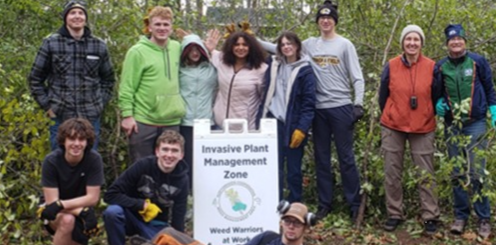
Preventing the spread of invasive species is an important aspect of management. The NCWMA's coordinator organized invasive species work events, managed and applied for grants, supervised seasonal staff, managed invasive species data, gave presentations, organized meetings and events, and more. The NCWMA also prevents the spread of aquatic invasive species with a portable high pressure, hot water boat wash that was taken out 38 times in 2025 to five different boat landings in the region.
Summary of Control and Management Efforts
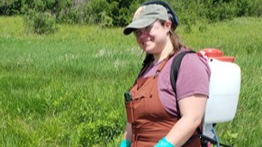
The NCWMA staff (the NCWMA coordinator and three invasive species technicians) treated common buckthorn, Dalmatian toadflax, garlic mustard, knotweed, teasel, wild chervil, and wild parsnip. The NCWMA also hired contractors to treat common and glossy buckthorn, bristly locust, garlic mustard and knotweeds. This section summaries the work and includes overall acreage of treatments for all invasive species.
Garlic Mustard Management
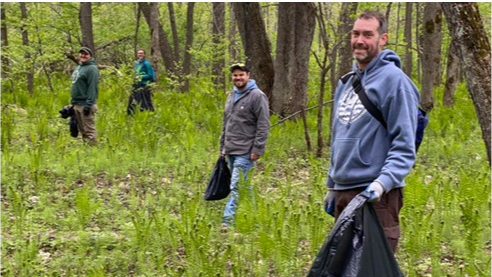
Garlic mustard is a high priority invasive species in the NCWMA. It is a biennial forb that can spread rapidly and take-over the understory of forests. Hand-pulling garlic mustard is the focus of the NCWMA’s work in May through mid-June. The crew worked 16 field days hand-pulling at 30 different sites, covering over 64 acres. The NCWMA organized eight different public hand-pulling events within the region in Hurley, Ashland, Mellen, Superior, and Cable.
Knotweed Management
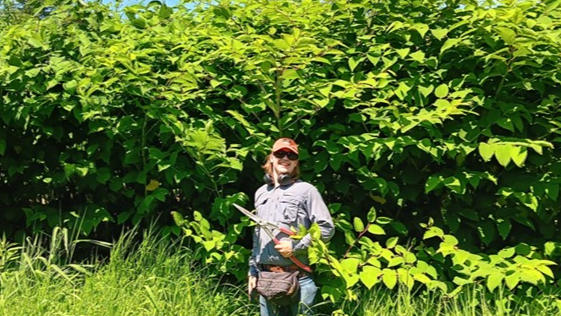
The NCMWA has focused on tracking and treating knotweed species over many years. Currently 368 knotweed sites are documented in the NCWMA region (Ashland, Bayfield, Douglas and Iron Counties). In 2025, the NCWMA treated 145 sites. The treatments are working. Of the knotweed sites that were surveyed and had been treated previous years, 50 sites had no knotweed return and 51 other sites had less than 10 small plants return.
Managing sites along roads and rivers is important. Knotweed can spread along roads from mowers. It also can spread along riverbanks by the flowing water, especially after flooding. Twenty knotweed sites have been discovered along five different rivers or streams in recent years. The NCWMA has made an effort to treat and survey along infested rivers.

Budget
The NCWMA was funded by a diversity of grants in 2025. The primary grant was the U.S. Forest Service’s Great Lake Restoration Initiative (GLRI) funding for weed management areas (USDA-FS-GLRI-CWMA grant). In addition, the US Forest Service funded the boat washing project with GLRI funding. The Wisconsin DNR managed a GLRI grant through the EPA that funded the “Knotweed Control Project.” The DNR also funded education and control work on private, forested properties with the Weed Management Area-Private Forest Grant (WMA-PFG) Program. Douglas County Land and Water Conservation Department helped fund treatments of knotweed along the Eau Claire River this year.


 Print
Print 